games
Backing
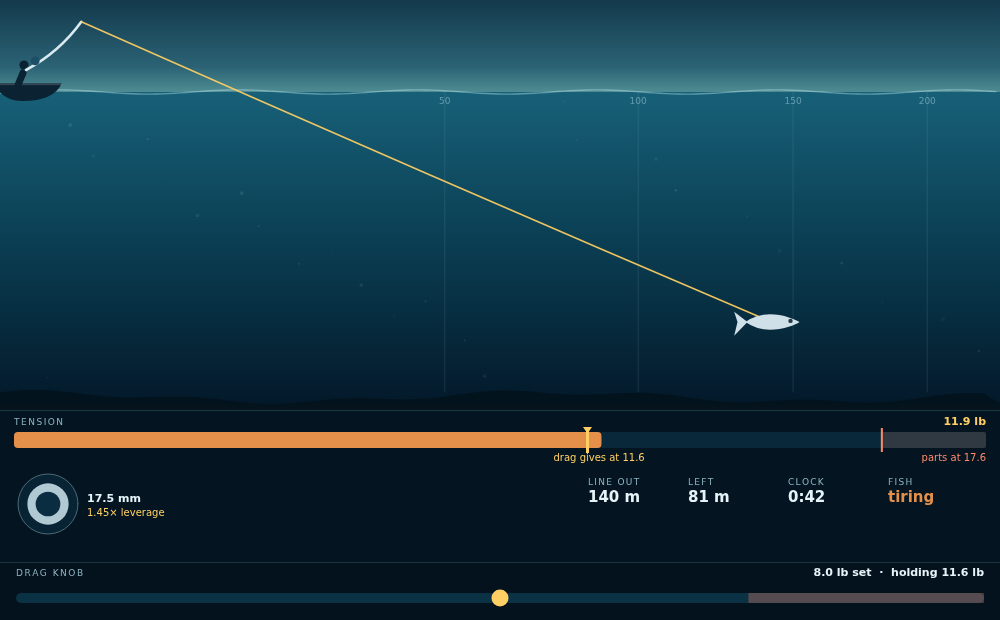
A drag is a friction clutch, so what it holds constant is a torque — and the line leaves from a radius the fish spends the whole fight making smaller. On this reel that is 2.43× between the lip and the arbor, so a 6 lb knob is 6 lb at the rod tip and 14.4 lb two hundred metres later, with nothing on the reel to say so. Against a 48 lb fish in open water that leaves exactly one fixed setting, 7 lb, that lands all twelve — and it wins by being spooled to within 5 m of the knot. Eleven pounds, a drag that is lighter than the winning one for the first 113 m of every run, parts the line 12 times out of 12 at an average of 133 m. Wind the knob down as the line leaves so the tension at the fish never moves, and 14.5 lb — never once lighter than the setting it beats — lands 40 out of 40, takes 37% off the fight and keeps 45 m more on the spool. The other half of the lesson is that the softest spring in the system is the line you have out: 20 lb braid at 150 m needs the fish to move 4.04 m to part it, and the same braid at 15 m needs 0.48.
Bind
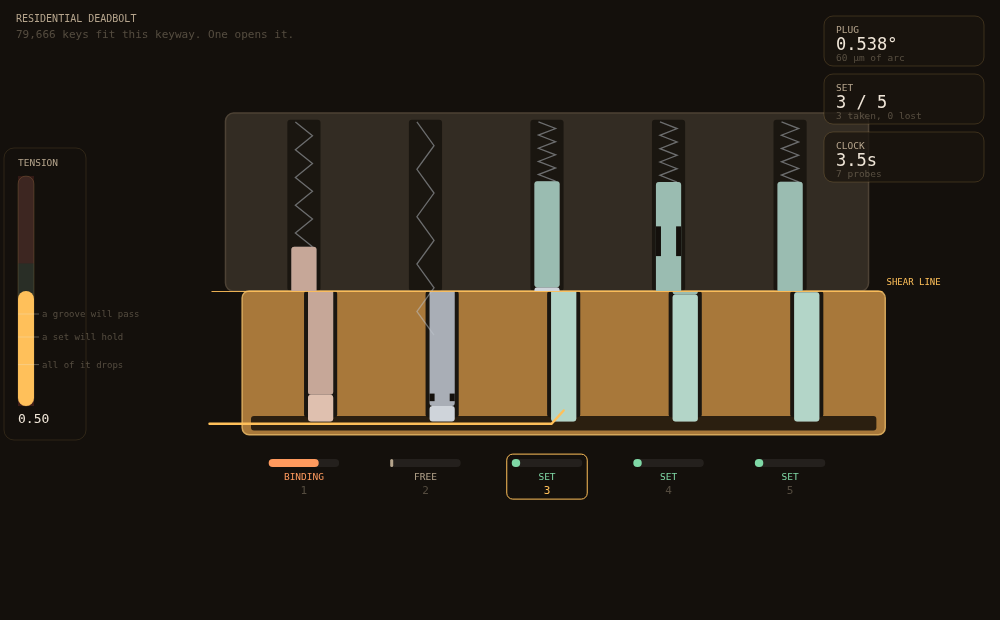
A lock has no partial credit — five pins at ten depths is 79,666 legal keys and 79,665 of them do exactly as well as a stick. Then the factory drills the chambers a thousandth of an inch out of line, one pin takes the whole load, and 39,833 median guesses collapse into about fifty moves. Tighten the shear line to stop that and the key fails first, because the key has to land all five at once and the pick lands them one at a time.
Egress
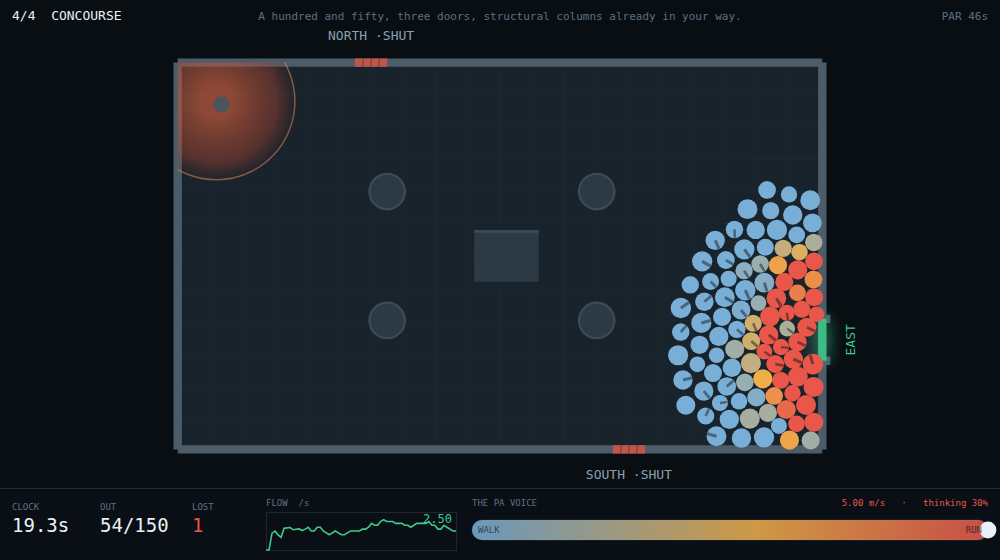
You are the voice on the PA and the only dial you have says how hard everyone is trying — which moves their walking speed and how well they still follow a route, both at once. Underneath is a Helbing social-force crowd on an Eikonal floor field, and it disagrees with the poster. Wrecking the crowd's navigation costs nothing measurable (112 s against 115); over-urging costs 9.6%; and leaving the dial at a stroll costs 74%, so the instinct worth distrusting is politeness, not panic. The door decides everything else: the same hundred people clear 1.50 m in 25 s and 0.80 m in 123 s, because throughput goes as width^2.24 rather than linearly — a 2.4 m door carries 12.6x what a 0.8 m one does on 3x the width, which is also why splitting one opening into two doors of half the width is 1.8x to 2.8x slower than leaving it whole. And one bollard beats a bare doorway by 16.7% when it sits 0.6 m upstream and a full metre off the centreline, while 11 of the 36 places you could put it seal the room and nobody gets out at all.
Oche
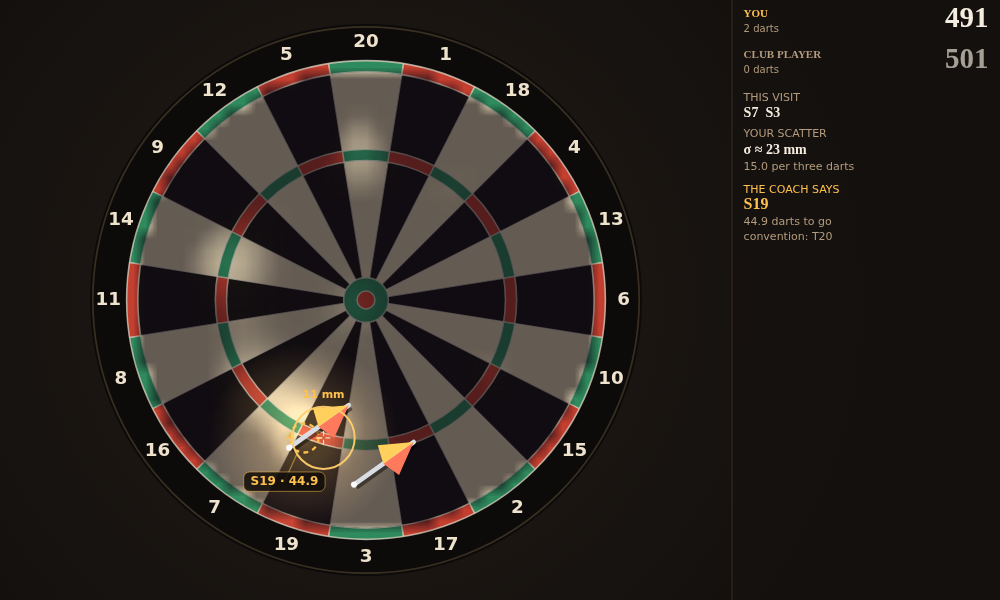
A dartboard is not a target, it is an arrangement, and the 20 is flanked by the 1 and the 5 — the meanest pair of neighbours on the board. Below 16.88 mm of scatter the treble twenty is the best place to aim and above it nothing is, so the piece measures how straight you actually throw and then plays your leg of 501 from there, one aim point at a time.
Sink
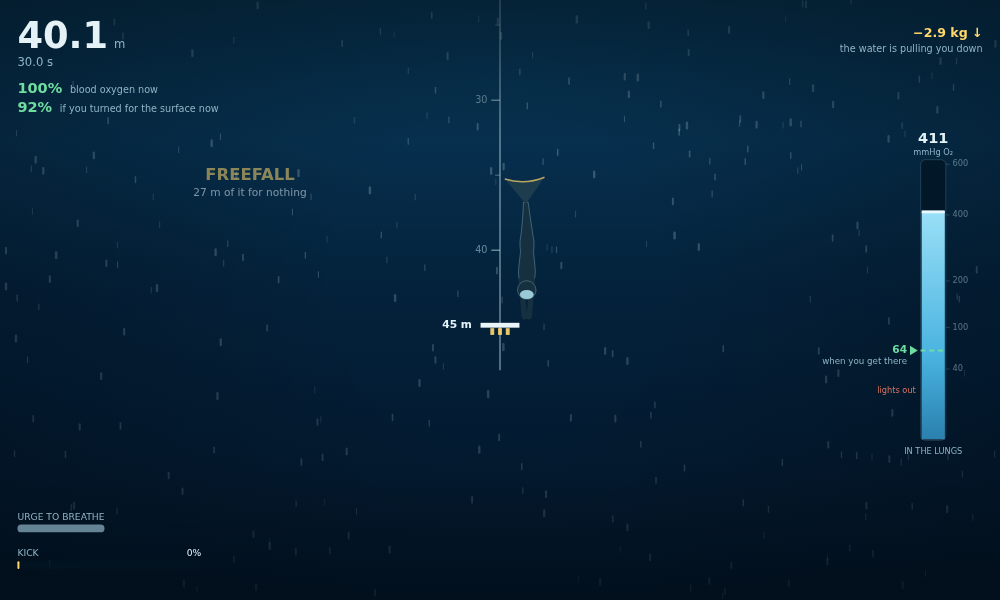
Ten metres down your lungs are half the size they were and you stop floating, so the rest of the way to the plate is free. The oxygen gauge in your chest then reads its best number of the whole dive at the bottom — because it is a fraction multiplied by a pressure you are about to give back — and 59% of the blackouts land in the last ten metres of a dive that went to fifty.
Flare
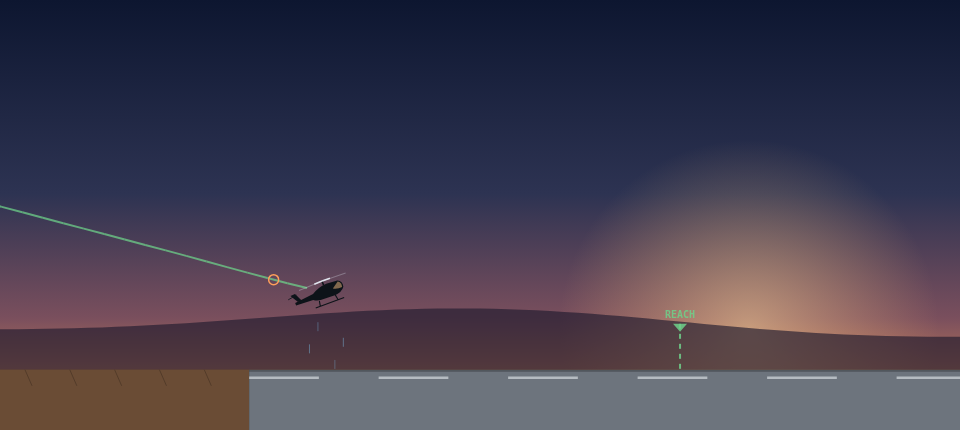
The engine is gone and the rotor is a flywheel with about a megajoule in it. Everything you do from here spends it, you only get to spend it once, and the landing is the last two seconds — so the whole game is refusing to buy anything comfortable on the way down.
Send
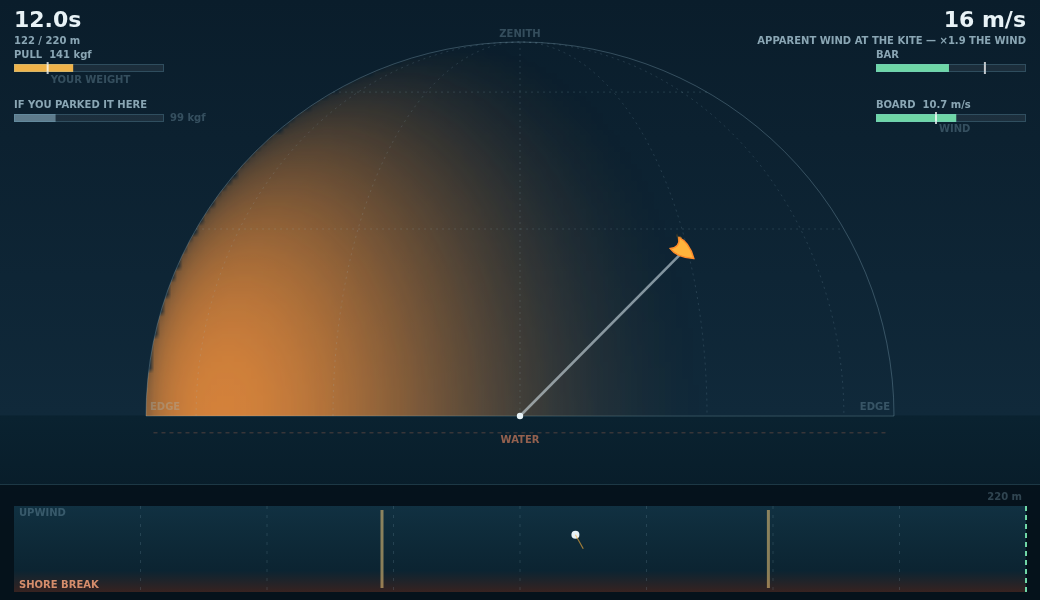
A nine-metre kite on twenty-four-metre lines, and one fact holding the whole thing up — a kite that is sitting still pulls with the wind, and a kite that is moving pulls with its own apparent wind, which is several times bigger and enters squared. Two hundred and twenty metres of beach, one hand on the bar, and nowhere to put the kite down.
Gather
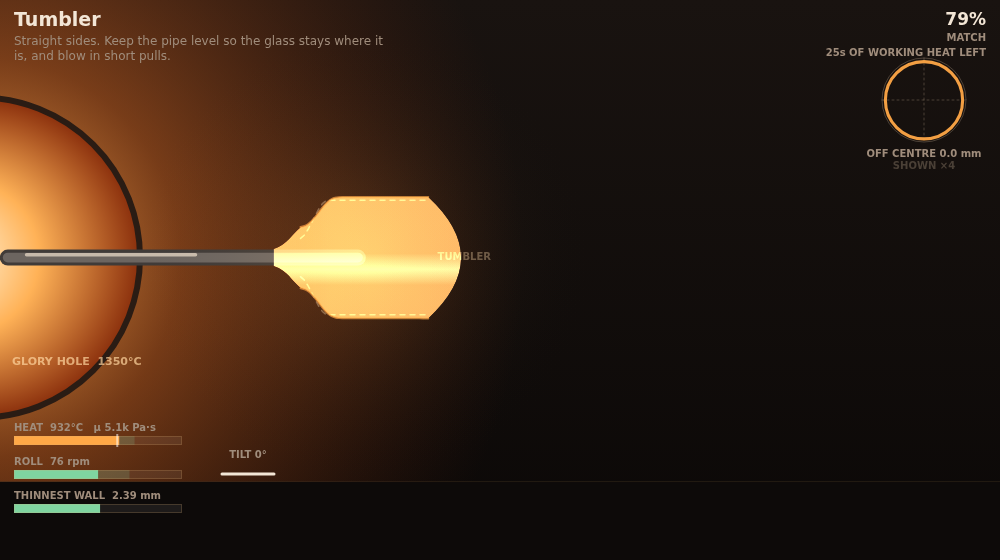
Hot glass on the end of a pipe, and one rule underneath all of it — viscosity. Blowing wants it hot, holding a shape wants it cool, and the only thing standing between a piece and the floor is that you never stopped turning. Three shapes, a minute or two each, and the physics is soda-lime's own.
Pebble
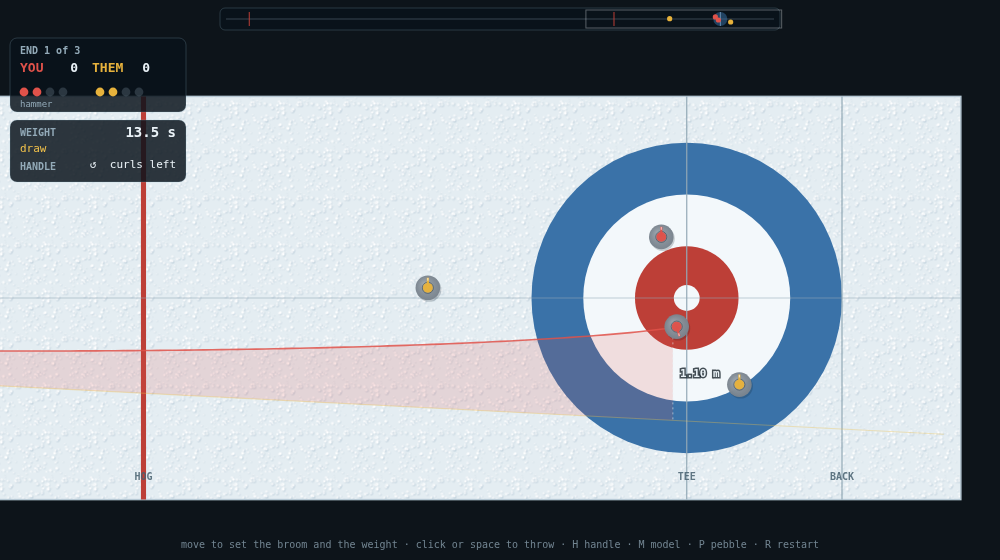
A curling end where the ice is the mechanic. Curling ice is not smooth — it is sprayed with droplets and frozen — and a stone rides the tops of them, which is the only reason it slides twenty-eight metres instead of five and the only reason it curls at all. Set the broom a metre off the target and find out why.
Beat
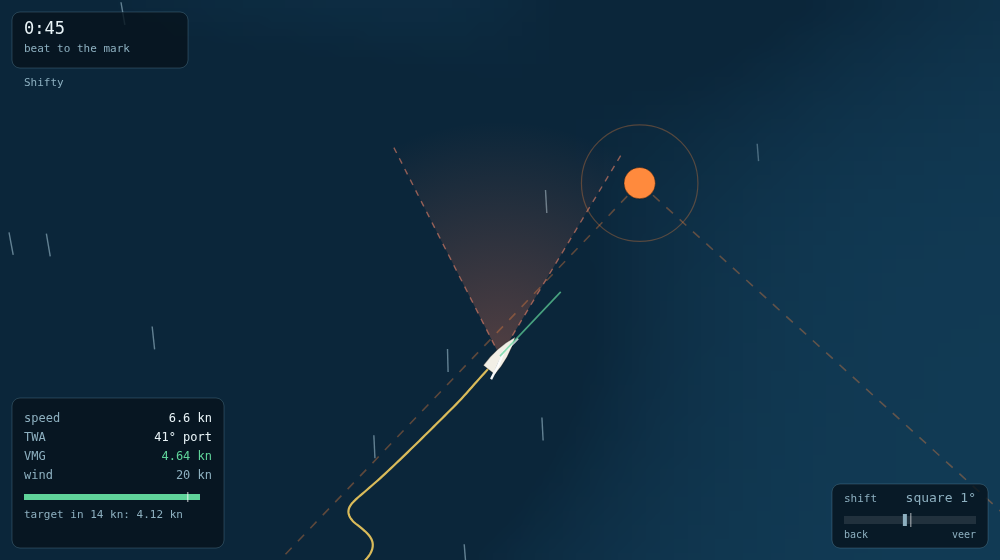
The mark is dead upwind and there is no heading that points at it. A windward-leeward lap where the fastest route to a buoy is never a line toward it, and the famous tactic for getting there — tack whenever the wind heads you — is measurably wrong until the shift is bigger than about eleven degrees.
Undertow
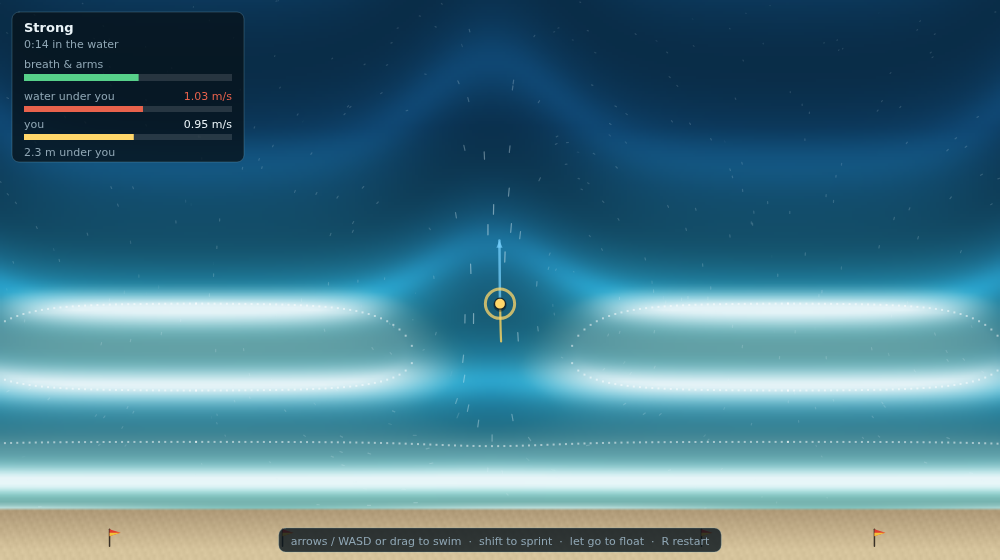
You are out of your depth in the gap between the breakers, and the gap is moving offshore faster than you can swim. Six policies measured against the same channel; every one that points at the beach drowns, and the fastest way to the sand is sideways.
Burner
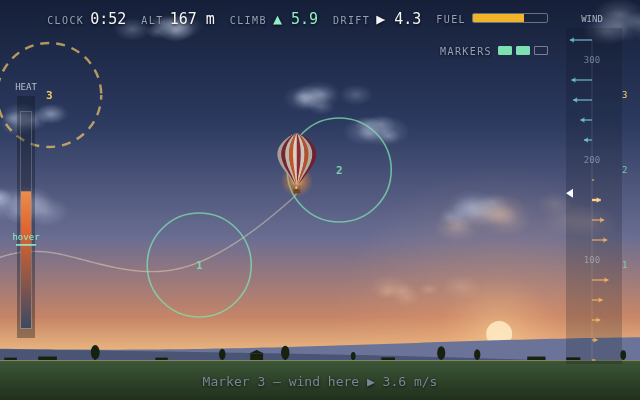
A hot-air balloon with no steering — heat is the only input, up and down is the only axis, and the wind points a different way at every altitude. Three markers and back onto the field you launched from, flying the box.
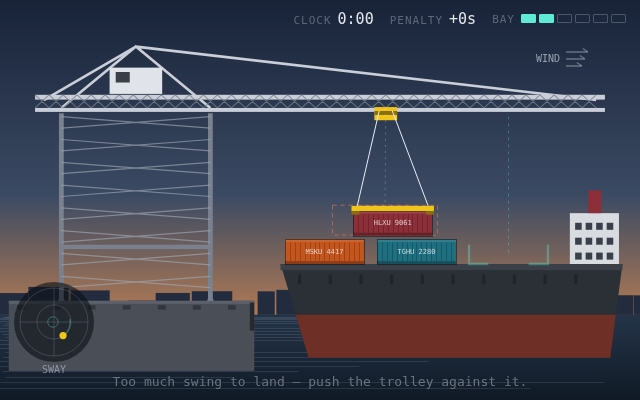
Sway
A ship-to-shore crane with two controls and no brakes on the part that matters. Six boxes off the quay and into the cells, against a clock that only counts the seconds you spend chasing a pendulum you started.
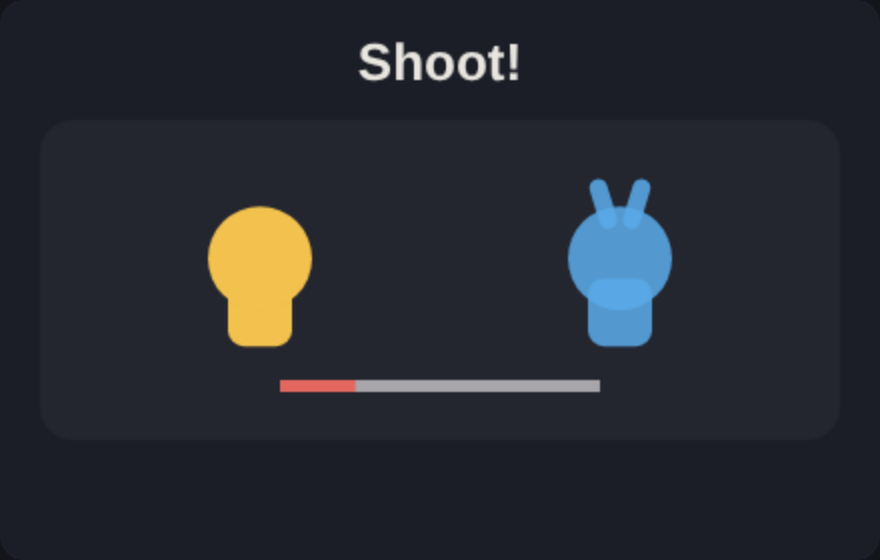
Shoot!
Rock-paper-scissors with one continuous knob — lock your throw the instant "Shoot!" lands and it's a blind guess; wait and the opponent's hand fades into its true shape, but hesitate too long and you flinch.
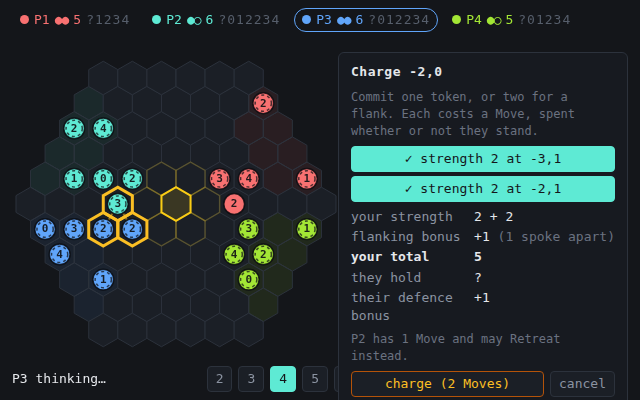
Feint
A hex battle game of hidden strengths. Six tokens — 0 1 2 2 3 4 — deployed face-down, two Moves a turn you can bank but not hoard, and a flanking bonus that pays by the spoke edge. Solo against bots, hot-seat behind a pass-the-device curtain, or online in a room you share by code.
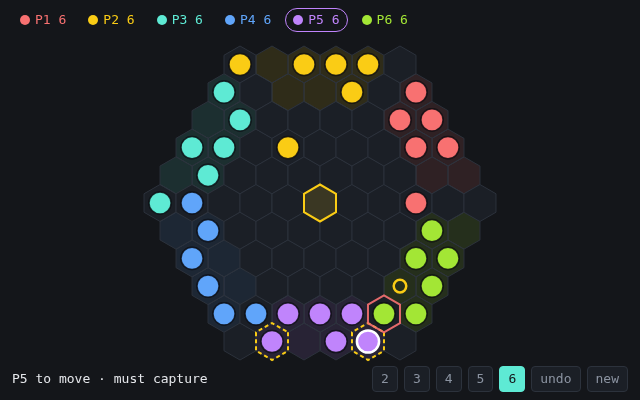
Hexagonal Checkers
Six-player checkers on a hex board — everyone's an enemy, captures are compulsory, and the single center hex is the only square that promotes. Hot-seat, or online in a room you share by code.
Hand-Me-Ups
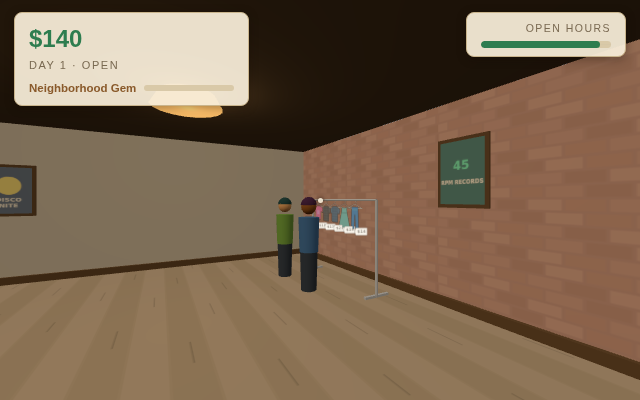
First-person vintage thrift store sim — price grandma's hand-me-downs, haggle at the register, make rent, and grow a bare storefront into the city's vintage institution.
Stand Clear
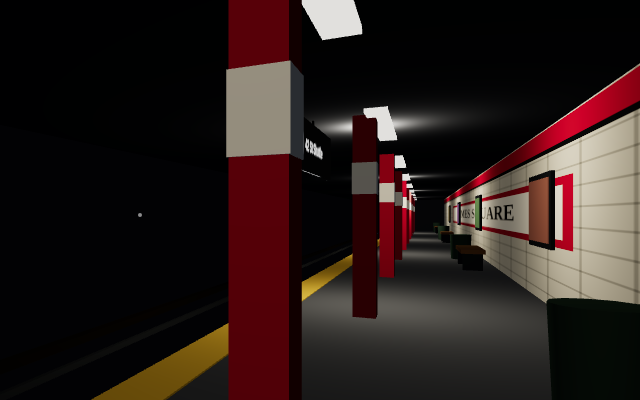
First-person subway with no buttons — three lines, six stations. Board by walking through the doors, transfer by walking off, up the stairwell, through the hallway, and down to the other line before its doors close.
Gobble City
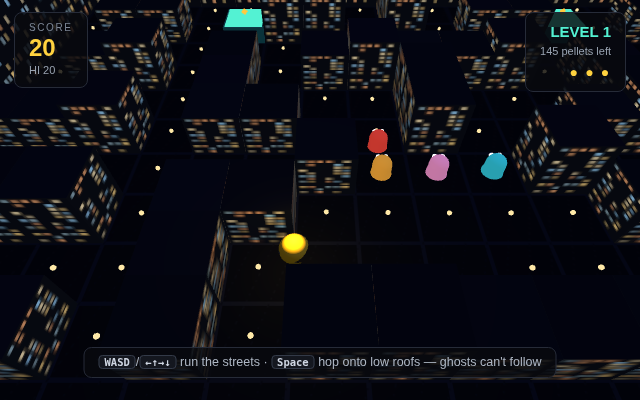
Pac-Man logic dropped into a 3D night city — gobble pellets through the street grid, and when the ghosts close in, hop onto the low rooftops they can't reach.
Straphanger
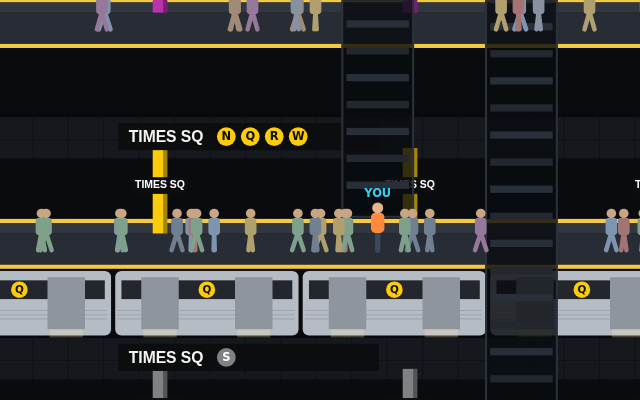
Race a randomly drawn Stop A → Stop B across the real NYC subway — read the arrivals board, ride the cars, shove through crowds, and run the stairs to make your transfer before the clock eats you.
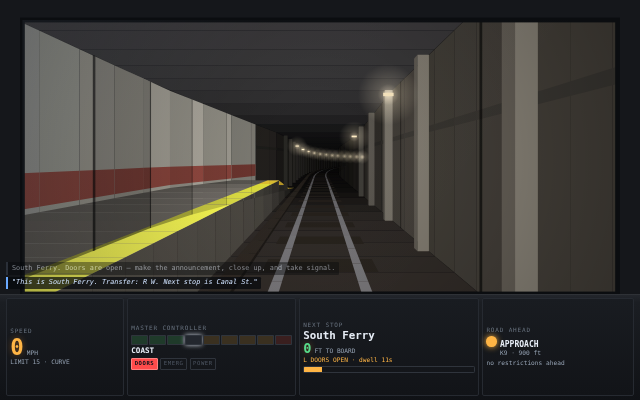
NYC Conductor
First-person subway cab sim — work the master controller down a signalled line, berth on the board, key the doors, make the call, keep the card.