sprites
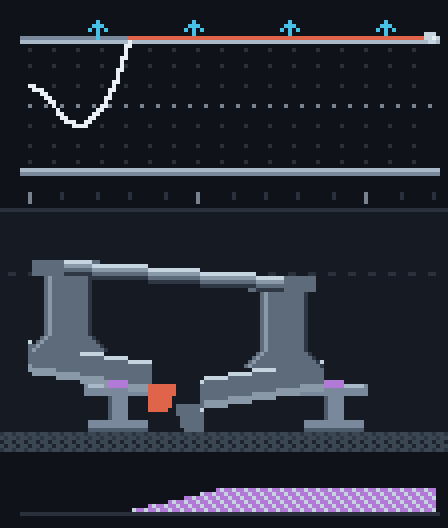
Coned
112×132 pixel wheelset with five loops: the weave it traces, the two contacts it rides on, and what it slides. A train has no differential — two wheels welded to one axle — so the only steering it owns is the 1:20 cone on the tread. Three things fall out. It weaves, at a wavelength of 14.48 m that is a fact about distance and not about speed, so the same shape runs past at 0.96 Hz on a subway and 2.76 Hz on a mainline. It is unstable: a free wheelset with creep forces grows from a 0.3 mm nudge to flange contact in 150 m, while the same wheelset sprung, let go hard against a rail, comes back down a clean exponential at 2.6 to a swing — what makes a train stable is not the cone but the springs. And it runs out almost at once — 7 mm of play against a cone that needs 35.39 mm to steer a 150 m curve, so the tightest radius it manages unaided is 758 m. Past that the steering is the flange: a 150 m curve asks the contact for 0.995% creepage, the cone can give 0.197%, and the 0.798% left over is 1.88 m of tread slid through a quarter circle by a force 4.7 times what friction can hold. Grind the cone steeper and the curves come back — 1:3.3 steers 126 m — and the model's critical speed falls from 330 km/h to 131.
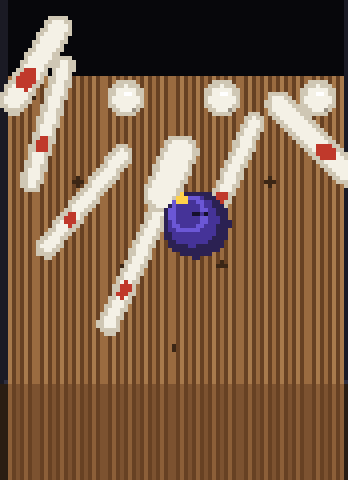
Too Wide
87×120 pixel tenpin deck in plan with four loops. Two pins are 12 in apart and 4.766 in thick, so the clear air between them is 7.234 in and the ball is 8.500 — too wide by 1.266. Flood the ball's configuration space and five of the ten pins turn out to have no position it can ever touch them from. It is not an energy problem: toppling a pin costs 0.0280 ft·lb and the ball arrives with 144.9, which is 518 times the whole rack. At the book pocket the ball touches three pins and the 1-3 door is 11.26 in wide by the time it gets there; take the entry angle out and the door is still 6.57, the ball has to shove, and it leaves the 8.
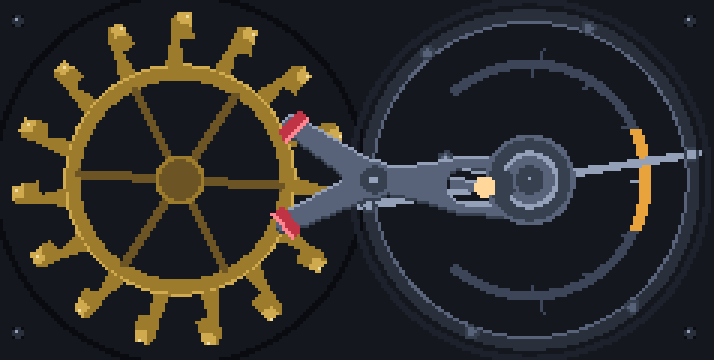
Detached
238×120 pixel Swiss lever escapement in plan with four loops. The balance is connected to the rest of the watch for 7.5 ms of every 125 ms beat — 6% of the time — and the other 94% is what the whole mechanism is for.
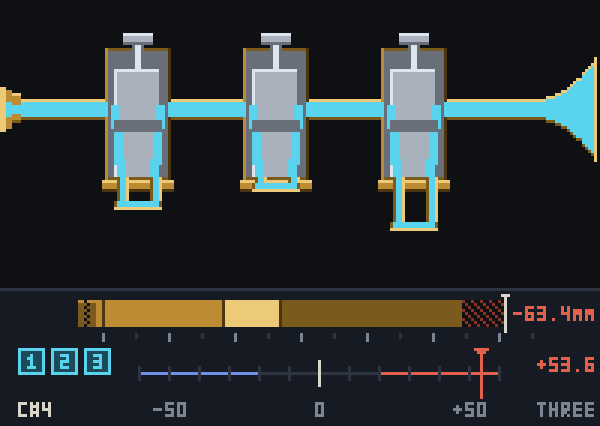
Low D
200×142 pixel trumpet valve block in section with five loops. Each of the three loops is cut exactly right, and together they are 63.40 mm of tube short — 53.56 cents, a quarter tone and then some, on written low C#. The error is not an approximation of anything; it is precisely the four cross terms you throw away when you expand a product as a sum. And it cannot be engineered out: the flattest three tubes that exist are still 16.32 cents wrong, which is why the instrument has a ring on it instead.
Standout
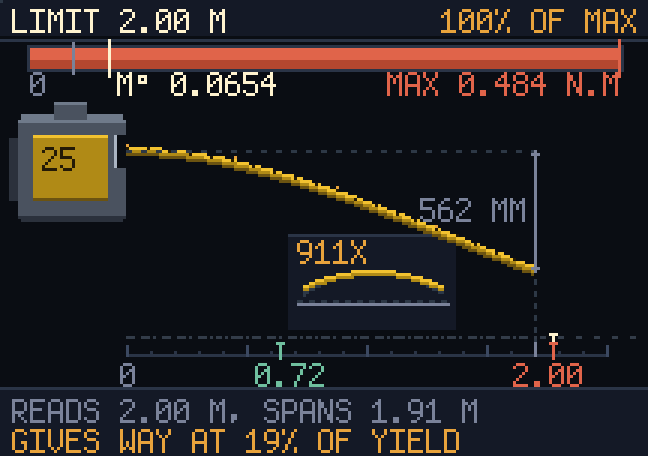
216×152 pixel tape measure with five loops. The blade is a strip of steel bent cold into a 20 mm arc, and that arc is worth 911 times the same strip flat. It stands out to 2.00 m, folds with no warning at 19% of yield, and then will not stand up again until you have wound it back to 0.72 m — a hysteresis of 2.77 that everyone who owns one has met and nobody is told the reason for.
Wrap
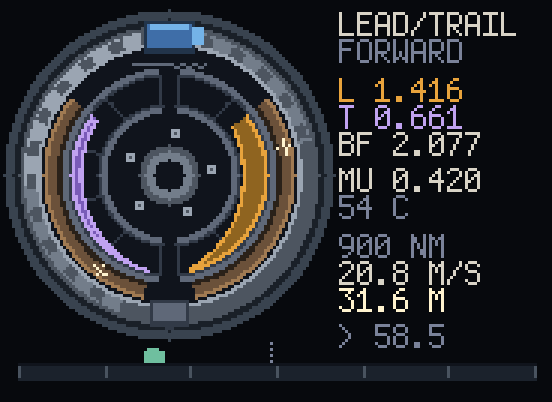
184×134 pixel drum brake seen through the drum, with four loops. Two identical shoes, one cylinder, one pressure, and one of them does 2.14 times the work of the other — which is geometry, not lining. The equation has a zero in it where the brake grabs on its own, and the drum is standing in the only place you could put the hinge to reach it.
Pitch
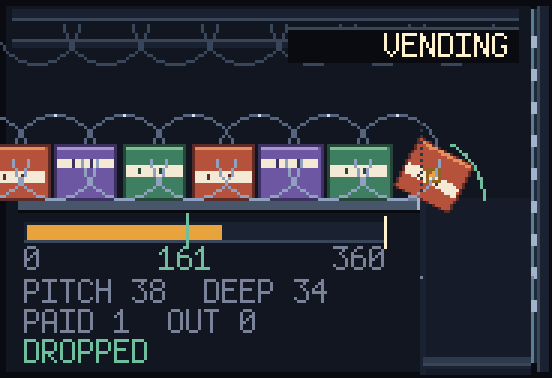
184×126 pixel vending shelf in elevation with four loops. The coil turns exactly once, every time, in every case — including the ones where nothing came out. What decides it is an angle nobody prints on anything, 180 × depth / pitch, and the margin it leaves is one millimetre.
X-Sync
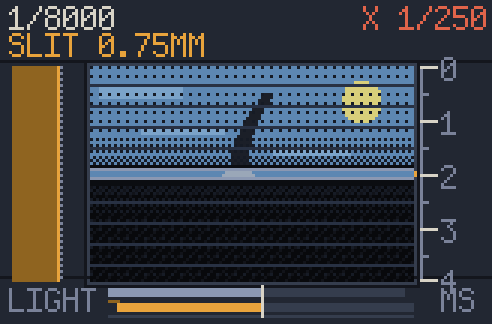
164×108 pixel focal-plane shutter with four loops, drawn from where the film sits. The dial does not open anything — it sets a delay between two curtains, and the shutter's only real speed is the 4 ms one nobody prints on it.
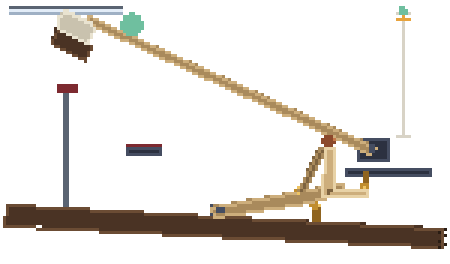
Let Off
150×88 pixel grand piano action in section with four loops. The key never touches the hammer at the moment that matters — a screw throws it away 2 mm short of the string, and that one number sets the quietest note the instrument can play.
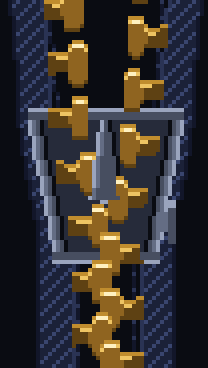
Slider
52×92 pixel zip fastener in plan with the slider's top plate off, and three loops. The chain is held shut by 0.8 mm of lap and a peg half a millimetre across, and the thing that decides whether the peg is in its socket is not on the chain — it is the inside of the slider, which is the one part in the whole assembly with a surface that wears.
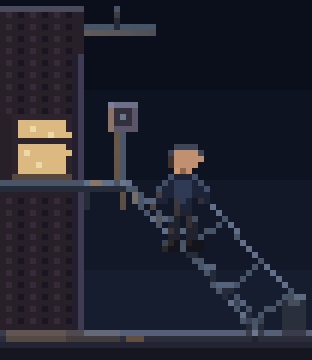
Last Flight
52×60 pixel sprite — a fire escape's counterbalanced bottom stair, drawn as a linkage rather than as poses, where the only term that grows is the paint.
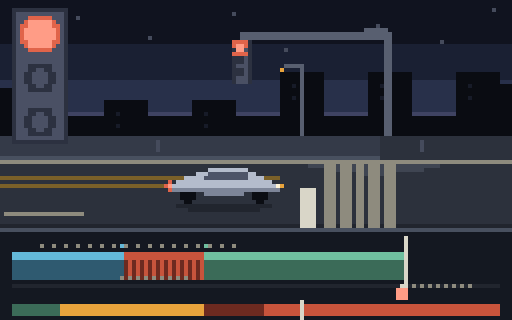
Amber
128×80 pixel signalised approach at dusk with three loops — a driver who can stop, one who can clear, and one who can do neither. The band of road where no lawful action exists turns out to be the missing seconds of yellow printed onto the asphalt — 26.2 m behind a 3.0 s yellow at 45 mph, and 1.30 s wide no matter how fast you cross it.
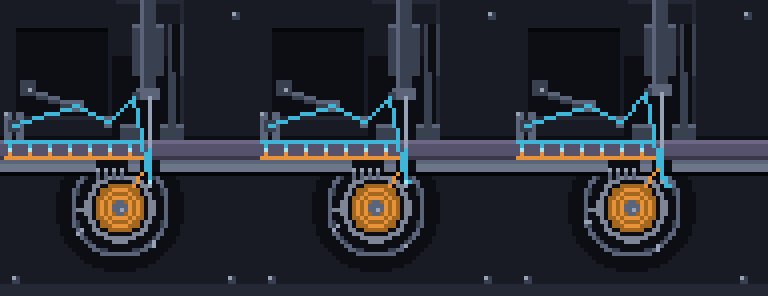
Lockstitch
64×74 pixel sewing machine head in section with three loops — the needle never goes through to the other side of the cloth, the hook does. The manual gives you two settings, a 2.2 mm rise and a 1.1 mm clearance, and they turn out to be one number written twice; the band between skipping early and skipping late is eleven degrees of shaft, which at 4,000 stitches a minute is half a millisecond.
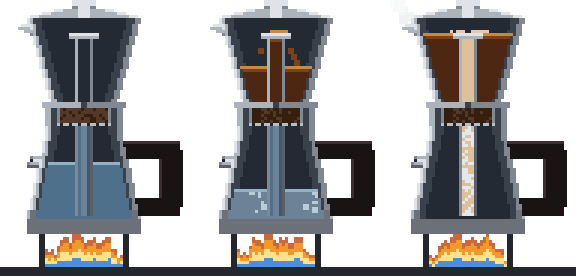
Sputter
64×92 pixel moka pot in section with four loops — the water never boils, it gets pushed by the air you sealed in, and the gurgle is the first and only boiling you ever hear.
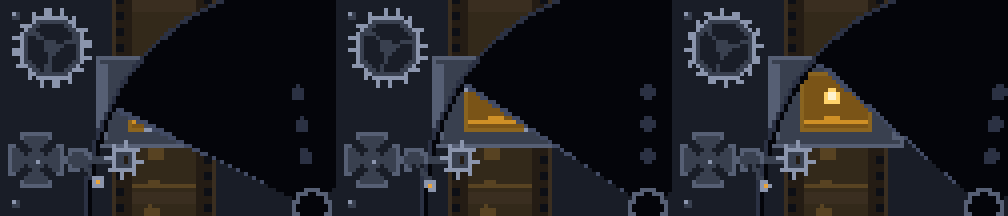
Two Blades
84×54 pixel projector movement with three loops — a Maltese cross yanking film through a gate, and a shutter whose second blade adds no information, costs you nearly half your light, and is the only reason the picture holds still.

One Way Round
38×50 pixel split-flap module with three loops, and a departures board where the famous rattle turns out to be a histogram of (new − old) mod 40.

Wheel of Life
64×44 pixel zoetrope, drawn in cutaway, with three loops and a demo where twelve slits against eleven drawings makes the wagon wheel roll backwards.
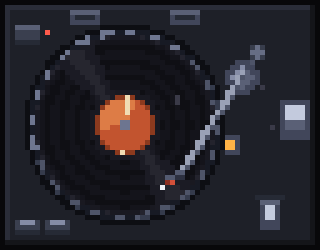
Inner Groove
64×50 pixel turntable seen from above — three loops, and a tonearm driven by real alignment geometry, so you can see the two places on the record where it is actually pointing the right way.

Harbor Light
48×40 pixel night seascape — a banded tower on a headland, three weather loops, and a lamp you can drive from a real light characteristic.
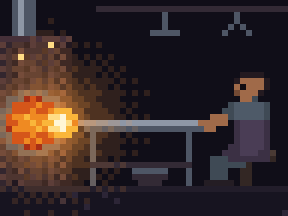
Gaffer
48×36 pixel sprite — a glassblower's bench lit only by the glass, with three loops including the one where you stop turning.

The Claw
32×40 pixel sprite — a prize-crane cabinet with three loops, including the one where the prongs open two beats early.

Lab Mouse
22×20 pixel sprite — a caged mouse whose posture reads sandbox containment, from fed and calm to loose with a stolen gold chip.

Gate Hound
34×24 pixel sprite — a checkpoint dog whose ears, hackles, and a badge reader's tick counter read a replayed credential, since the lamp itself still says valid.

Night Shift
34×24 pixel sprite — an owl at a terminal whose posture and screen read how full its own context window is, from a slow blink to a whiteout compaction.
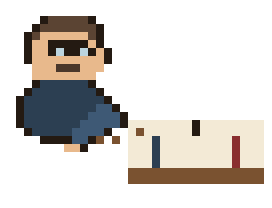
Ledger Scribe
34×26 pixel sprite — a bookkeeping clerk whose posture and tally columns read how well the ledger balances, from steady strokes to a snapped quill.

Warehouse Duck
24×20 pixel sprite — a rubber duck whose waterline reads query load, from a calm float to fully submerged.

Hot Dog Cart
27×27 pixel sprite — a classic NYC umbrella hot dog cart with a 2-frame steam-drift idle and a 4-frame serving loop, a gloved hand rising to hold one up.

Court Ace
22×20 pixel sprite — a tennis player with a split-step ready bounce and a four-frame forehand swing, timed to the US Open's main draw.

Subway Squirrel
26×22 pixel sprite — a chunky platform squirrel with a 2-frame idle sit-and-blink and a 4-frame nibble-and-tail-flick loop, drawn from an editable character map.

Subway Seagull
32×24 pixel sprite — a white-and-gray platform seagull with a 2-frame idle bob-and-blink and a 4-frame wing-stretch flap, drawn from an editable character map.
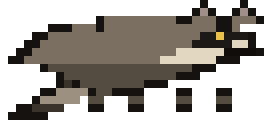
Subway Raccoon
34×16 pixel sprite — a bandit-masked platform raccoon with a 2-frame idle sniff-and-blink and a 4-frame rolling waddle, drawn from an editable character map.

Platform Cat
32×22 pixel sprite — a chunky black platform cat with a 2-frame idle bob-and-blink and a 4-frame grooming wash-up, drawn from an editable character map.

Subway Cockroach
26×12 pixel sprite — a subway cockroach with a 2-frame twitchy idle and a 4-frame tripod-gait skitter, drawn from an editable character map.
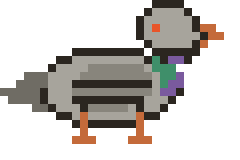
Platform Pigeon
30×20 pixel sprite — a chunky rock pigeon with a 2-frame idle bob-and-blink and a 4-frame head-bob strut cycle, drawn from an editable character map.

Subway Rat
30×14 pixel sprite — a chunky subway rat with a 2-frame idle bob-and-blink and a 4-frame scurry cycle, drawn from an editable character map.

Scout Drone
21×14 hover-drone sprite — 2-frame idle bob and a 4-frame sensor-scan loop, drawn from an editable character map.

Cat Stretch
28×18 pixel sprite — an orange cat with a pink bow doing a morning play-bow stretch.
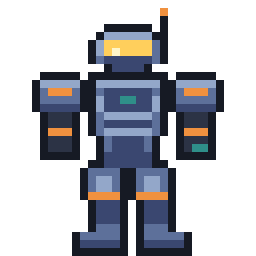
Mech Strider
32×32 bipedal mech sprite — 2-frame idle, 4-frame walk cycle, two team palettes, drawn from editable character maps.

Magic Is Reel Sprites
16×16 top-down pixel set — player (4 directions), bunnies, NPCs, and overworld tiles.